Bitso Card Benefits
Bitso Card's most powerful retention lever — Cryptoback, a crypto rewards program — was about to disappear. Regulatory pressure in Mexico required the team to sunset the feature, and with it, the primary reason cardholders cited for using the card. This project shows how I designed an in-app benefits experience to sustain engagement and NPS while a compliant long-term rewards model was being built behind the scenes.
Timeframe: 2 months
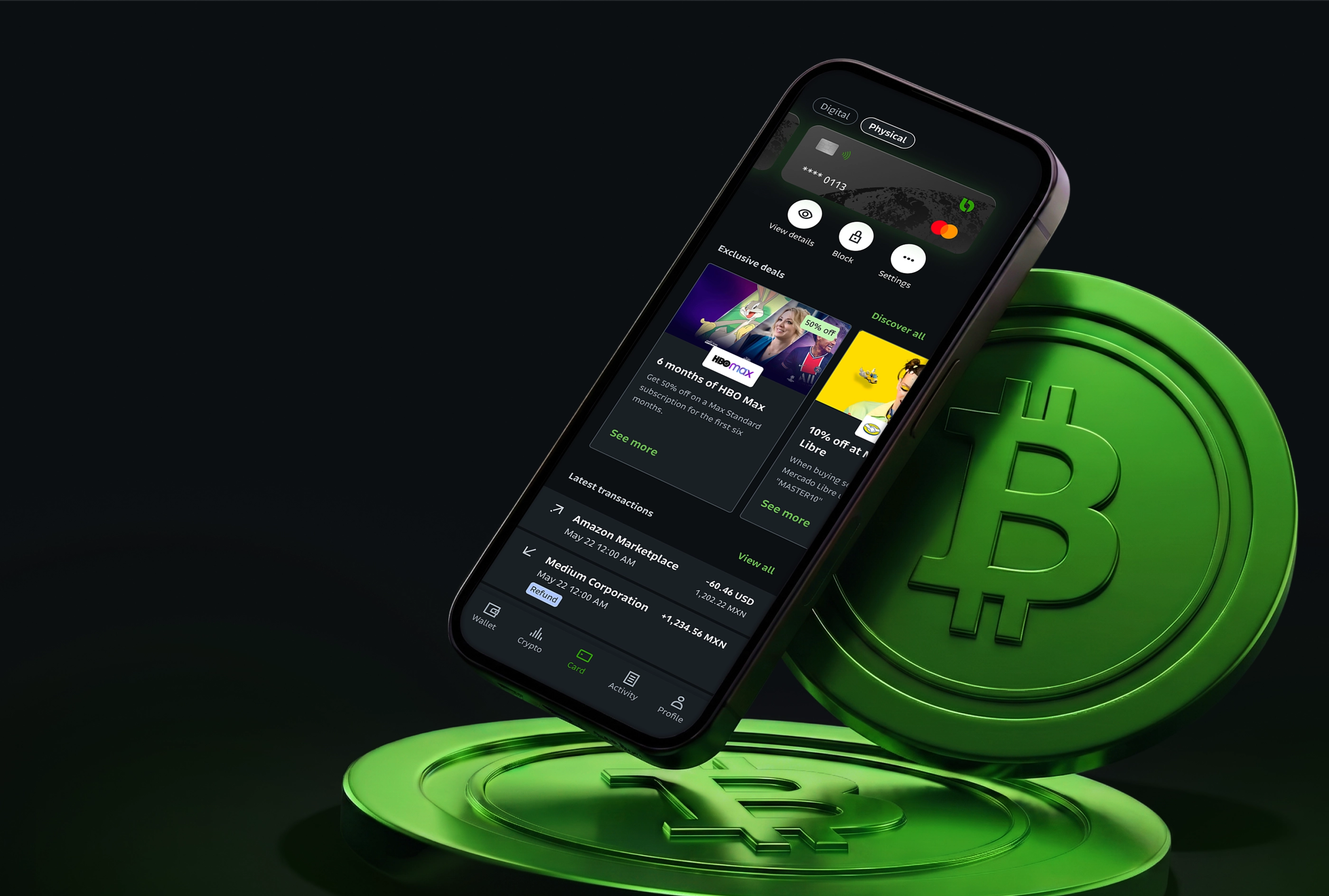
Scenario and roles
Cryptoback was the centerpiece of Bitso Card's value proposition — and the single most mentioned feature in both marketing materials and user feedback. It worked simply: every card purchase earned a percentage back in crypto, deposited automatically into the user's wallet. For many users, it was the reason they activated the card at all.
In early 2023, a regulatory change from Mexico required Bitso to phase out Cryptoback in its current form. The feature couldn't continue operating under the new compliance framework, and there was no immediate replacement ready.
The risk was measurable and urgent:
- NPS was directly tied to Cryptoback. Analysis of NPS showed that a huge part of comments in the previous quarter specifically mentioned Cryptoback as their reason for usage.
- Card usage depended on perceived value. Behavioral data showed that users who had active Cryptoback rewards made 5x more transactions per month than those who didn't. Removing the feature without a replacement risked a sharp drop in card engagement.
The team's challenge was designing something that could sustain engagement and protect NPS during the transition period, while staying fully compliant with the new regulatory environment.
As the Senior Product Designer leading this effort, I owned the project end-to-end — from research synthesis and concept development through to final interaction design, handoff, and QA.
I partnered closely with the Product Manager on prioritization and phasing, with Data Science on behavioral analysis and metric definition, with Content Design on copy strategy (critical in a regulatory context), with Legal on compliance review of every user-facing surface, with Engineering on technical constraints and rollout, and with Marketing on positioning the benefits launch externally.
I also iterated previous work from Catarina Corniani (Senior Product Designer) on adjacent card surfaces.
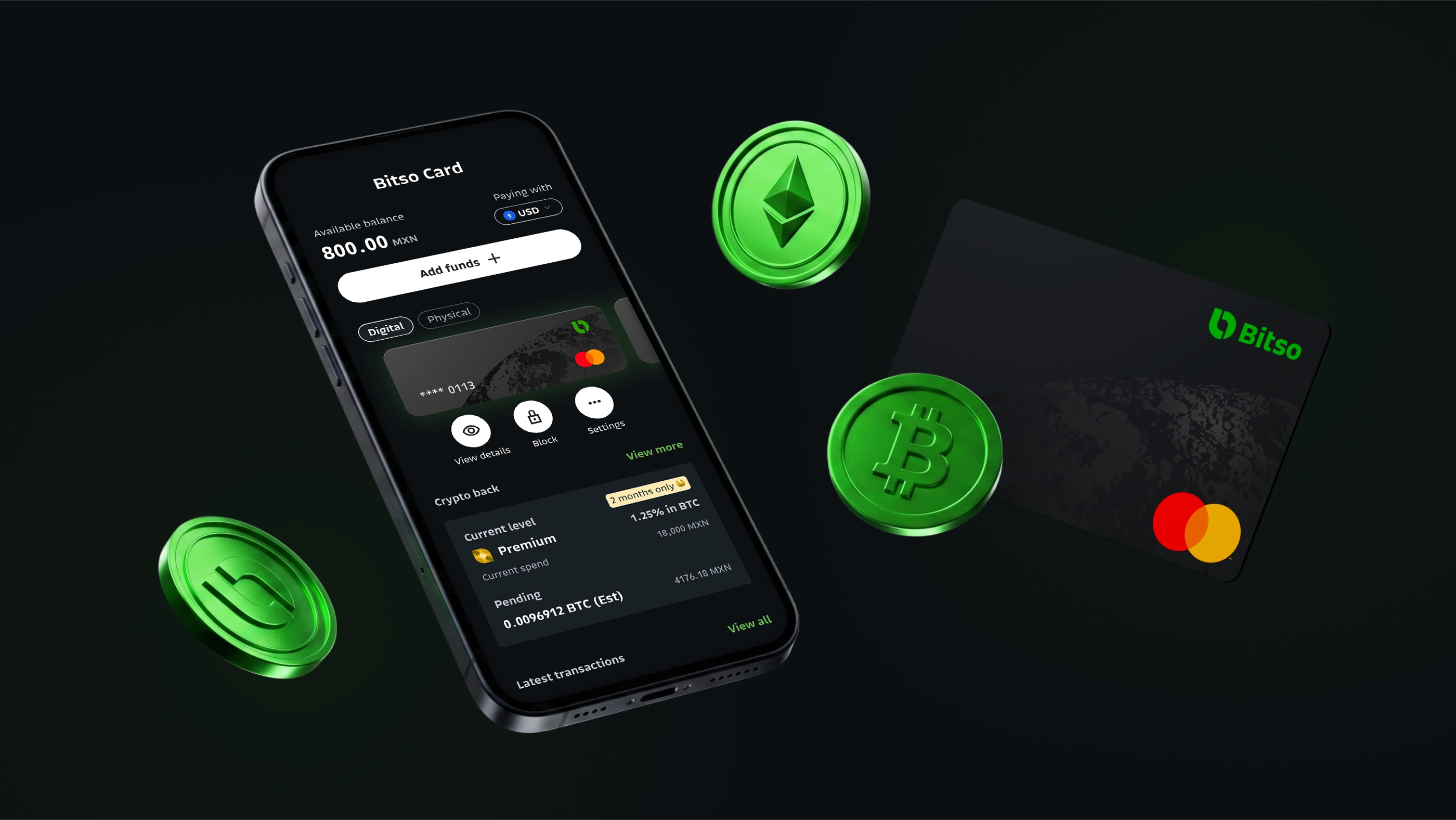
Cryptoback benefit displayed in the card dashboard's main view.
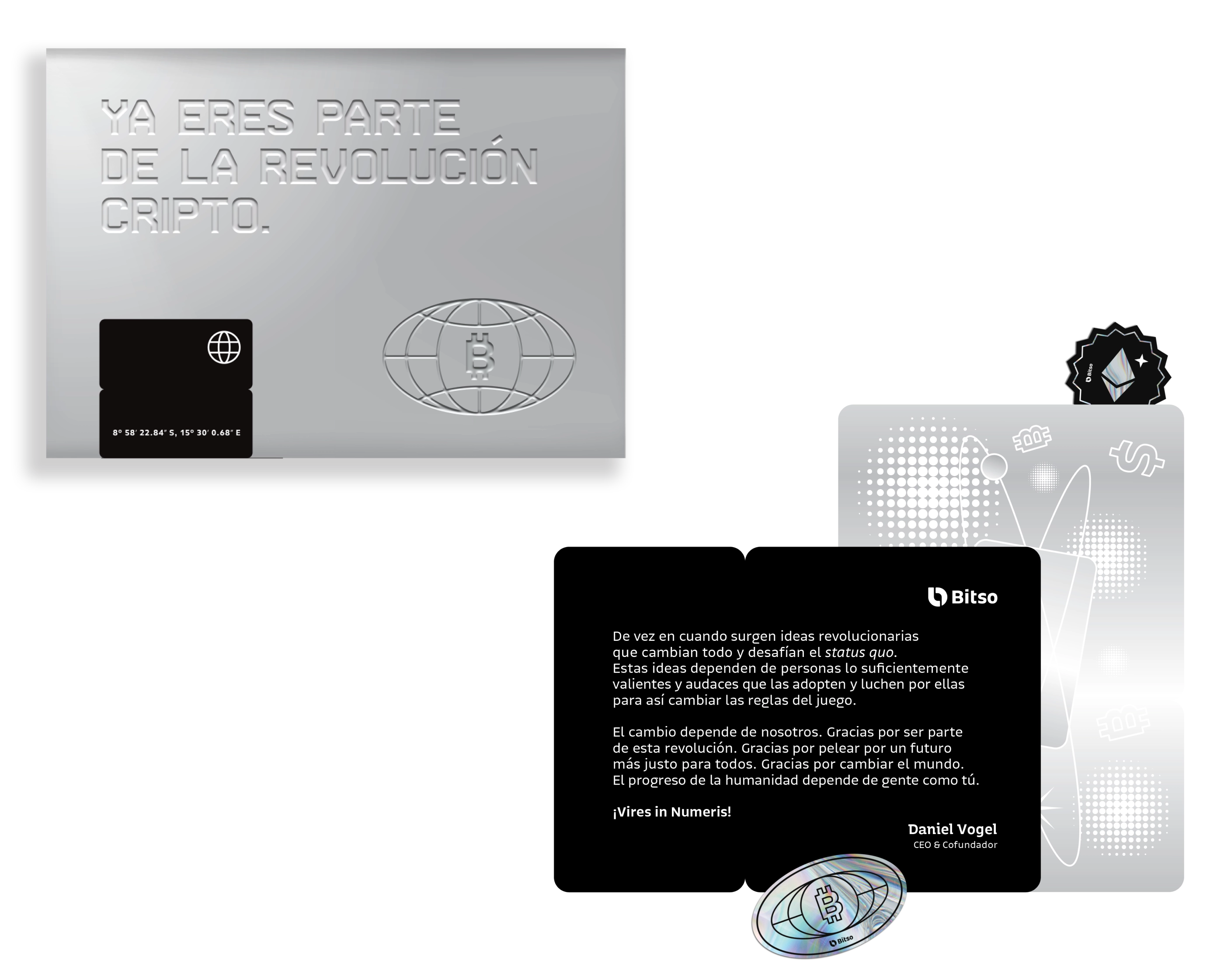
Bitso Card packaging designed by the Creative Studio team to extend the product experience into the physical world.
Discovery
Given the urgency — two months to ship — we ran a compressed but structured discovery program. The constraint forced us to be deliberate about which methods would yield the most actionable insights in the shortest time.
- Card Benefits Survey — Distributed to all active cardholders from a three-month window to quantify which benefit types users valued most, their willingness to engage with non-crypto rewards, and their emotional response to the Cryptoback changes.
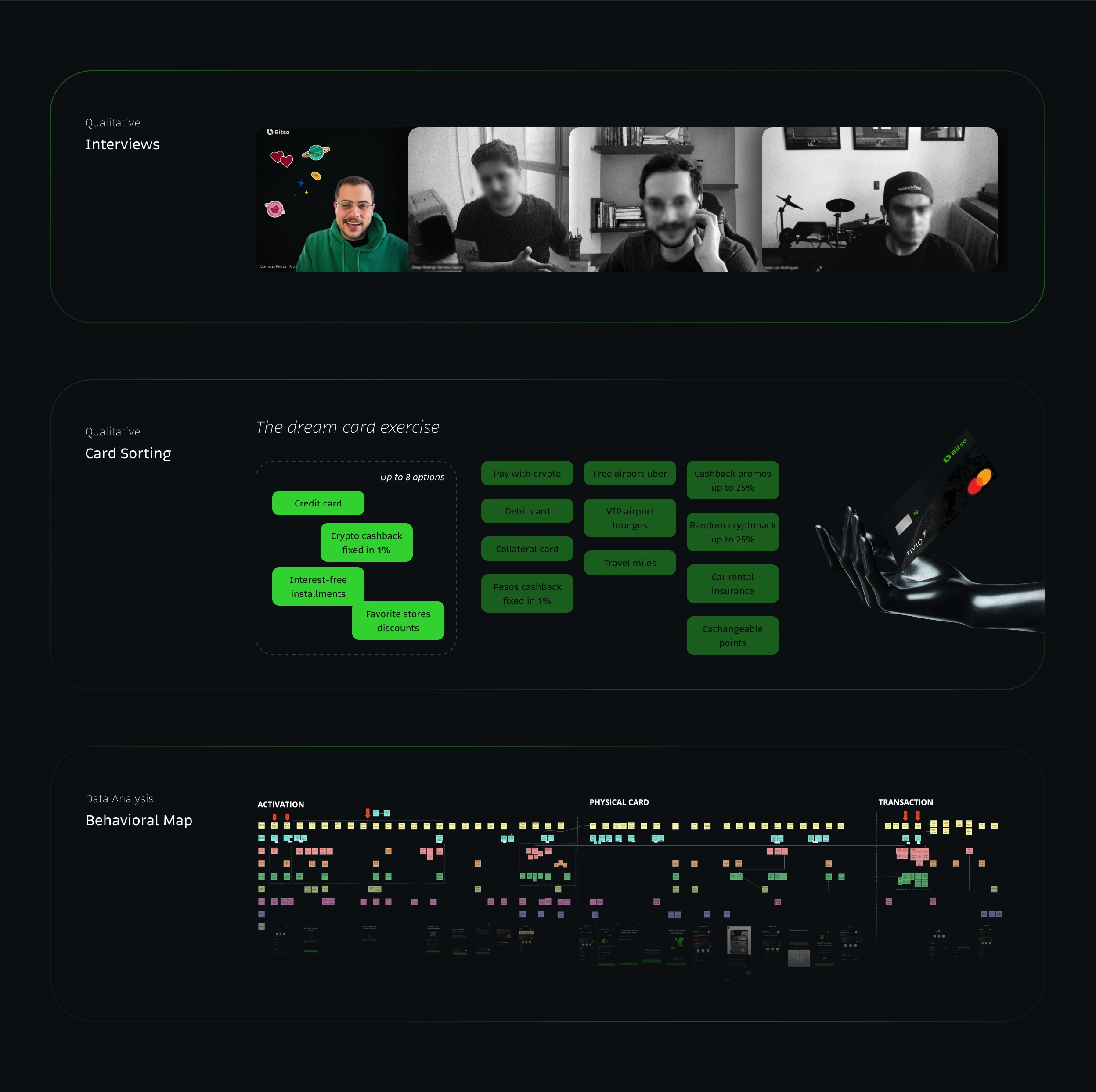
- Two rounds of in-depth interviews with card sorting — 10 participants across both rounds. The first round focused on understanding how users mentally categorized card benefits (crypto rewards, discounts, exclusive access, cashback) and what "valuable" meant to them in practice. The second round tested early concepts.
- Behavioral analytics — Working with Data Science, we mapped card usage patterns by benefit engagement level, identifying which user segments were most at risk from the Cryptoback removal and what alternative engagement signals existed.
- Competitive analysis — We benchmarked more than 10 card loyalty and benefits programs, including traditional financial products and crypto-native products, to understand market standards for rewards communication and redemption UX.
What we learned
- Users cared about the feeling of earning, not just the asset. Interview participants consistently described Cryptoback's value in emotional terms: "it feels like I'm getting something every time I buy." The specific crypto asset mattered less than the sense of accumulation. This meant a non-crypto benefit could work if it preserved the feeling of earning with every transaction.
- Simplicity of redemption was a dealbreaker. The survey analysis showed that "easy to redeem" was one of the strongest must-have attributes. Users who had experienced loyalty programs with complex point systems or expiration dates were strongly averse to anything that felt effortful.
- Any form of cashback outperformed other benefit types. Across the survey and interviews, cashback in any format (crypto, fiat, statement credit) consistently ranked first. Exclusive deals and partner discounts were valued, but as additions — never as replacements for cashback.
- Credit was the next frontier. Unprompted, 10 out of 10 interview participants mentioned wanting a credit card from Bitso instead of only debit. This wasn't in scope for this project, but the consistency of the signal was strong enough to feed directly into roadmap proposals for the following quarters.
Key design decisions
Rather than launching a single feature and hoping it stuck, I framed the benefits experience as three progressive phases of user commitment, each designed to meet users where they were and gradually deepen engagement:
- Phase 1 — Immediate value (this launch). Low-friction benefits that users could engage with instantly: partner deals, exclusive discount codes, and curated offers surfaced directly in the card section of the app. No crypto knowledge required. The goal was to fill the engagement gap left by Cryptoback's reduction immediately.
- Phase 2 — Crypto-linked rewards (next quarter). A compliant version of crypto benefits — structured in partnership with Legal — that would link card usage back to crypto earning in a way that satisfied the new regulatory framework. This was the path back to what users loved about Cryptoback, rebuilt on compliant foundations.
- Phase 3 — Personalized loyalty (future). A tier or segment-based system where benefits improved with usage, creating a retention flywheel. This phase would leverage the behavioral data being collected from Phases 1 and 2 to personalize rewards by user segment.
This phasing gave us a strategic story for stakeholders (not just a quick fix, but a roadmap), a clear scope for the next sprints (Phase 1 only) and a research foundation that would carry into future phases. Unfortunately, the other two rollouts were deprioritized due to changes in the organization.
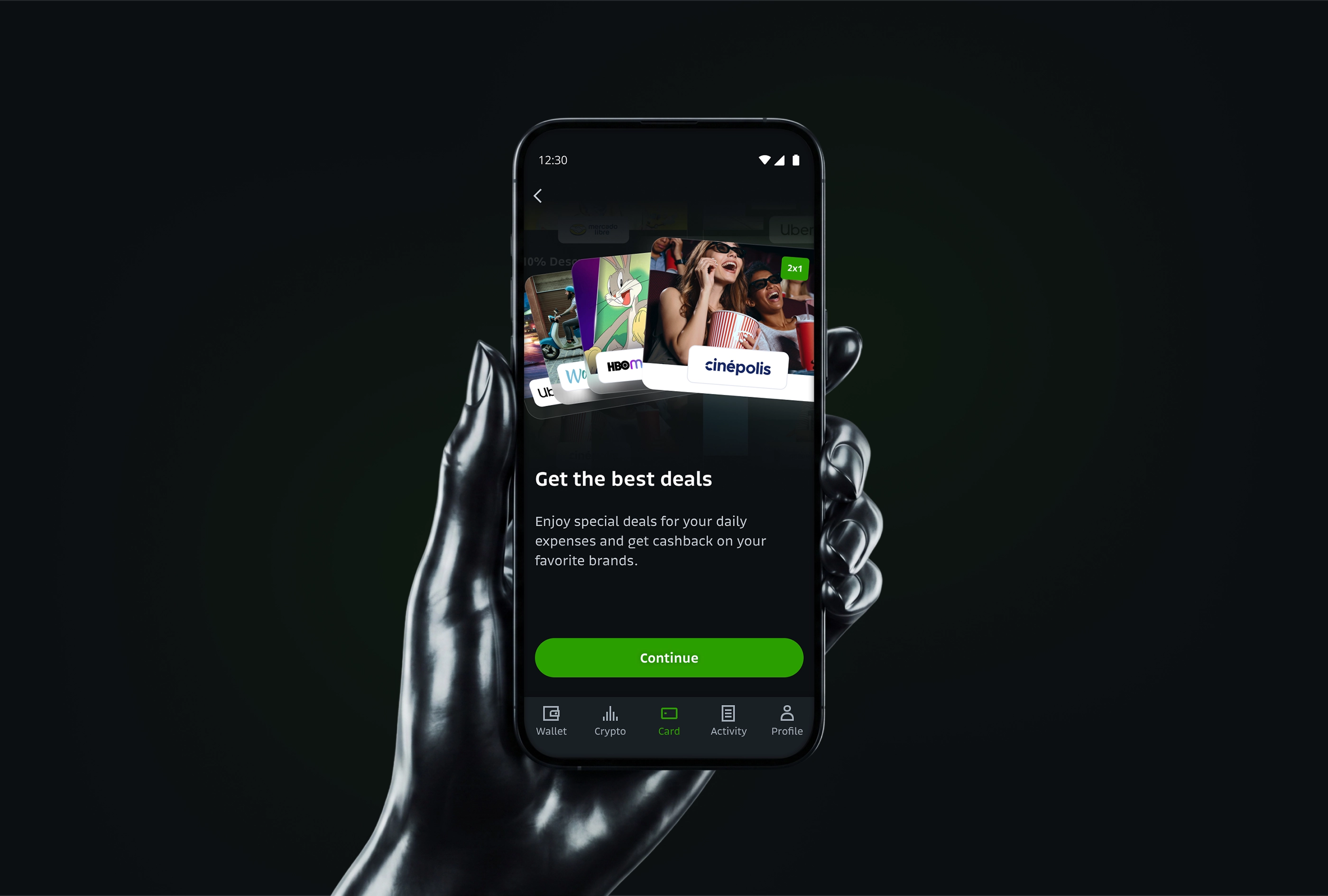
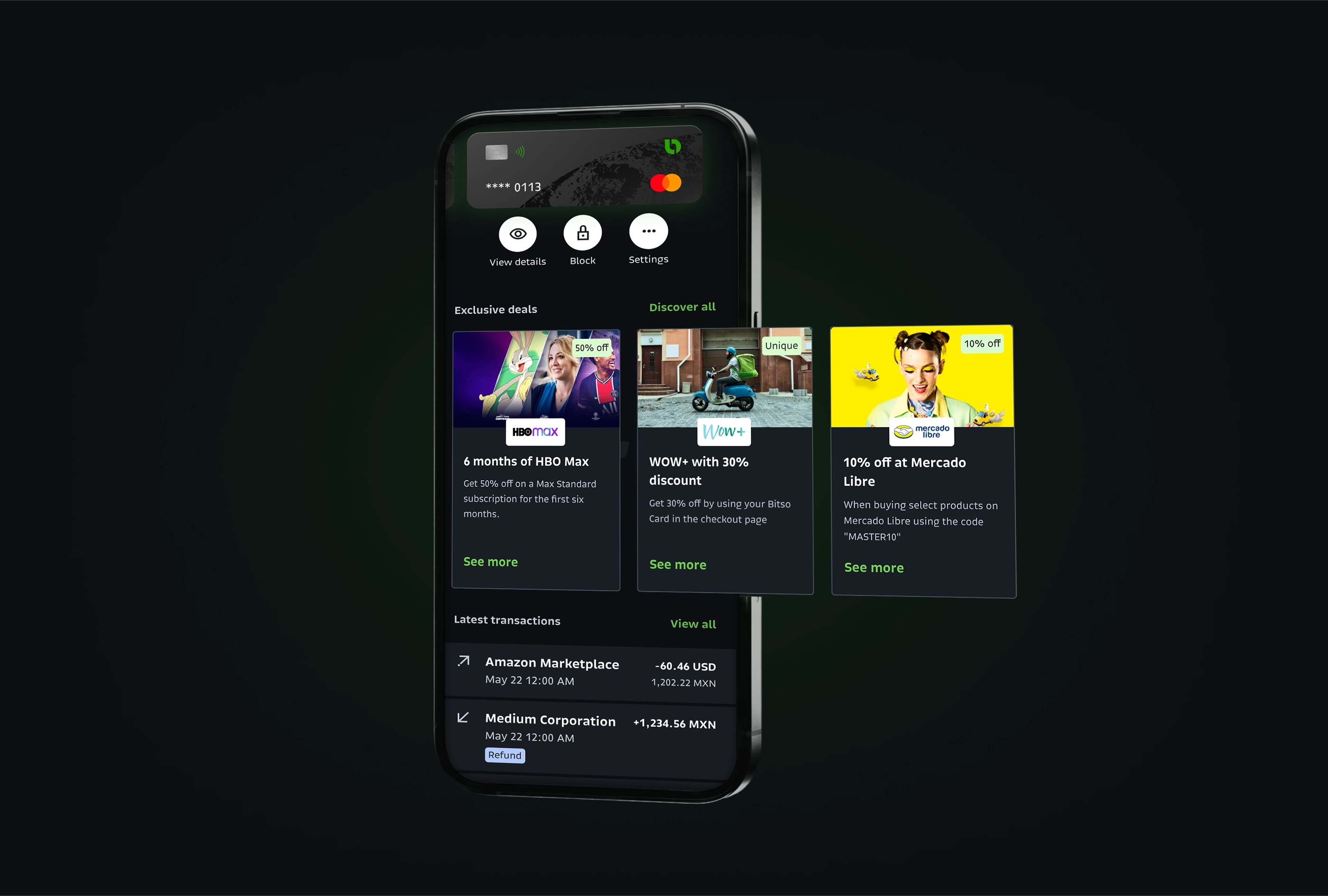
For Phase 1, I designed an "Exclusive Deals" experience — a benefit code model that moved the product closer to real-world reward programs users already understood. The concept was deliberately simple: curated deals from partner brands, each with a unique code, redeemable in a two-tap flow.
Why this direction: Research showed that users' mental model of "benefits" was anchored in programs they already used such as cashback, airline miles, retail loyalty cards. A code-based deal system mapped directly to that mental model. It didn't require users to learn a new paradigm, and it didn't trigger the regulatory concerns associated with crypto reward language.
What we rejected: An early concept explored a points-based accumulation system where card transactions earned points exchangeable for benefits. We killed it after the discovery analysis showed that points systems with delayed gratification were strongly associated with negative sentiment — users described them as "tricks" and "things that expire before you use them." Immediate, tangible value won.
Deliverables
The core delivery was a complete benefits flow integrated into the Bitso Card section of the app.
- Home carousel: A horizontally scrollable surface on the card dashboard showing active benefits, highlighted deals, and time-sensitive offers. Designed to be the first thing cardholders see when they open the card section, replacing the visual space previously occupied by Cryptoback metrics.
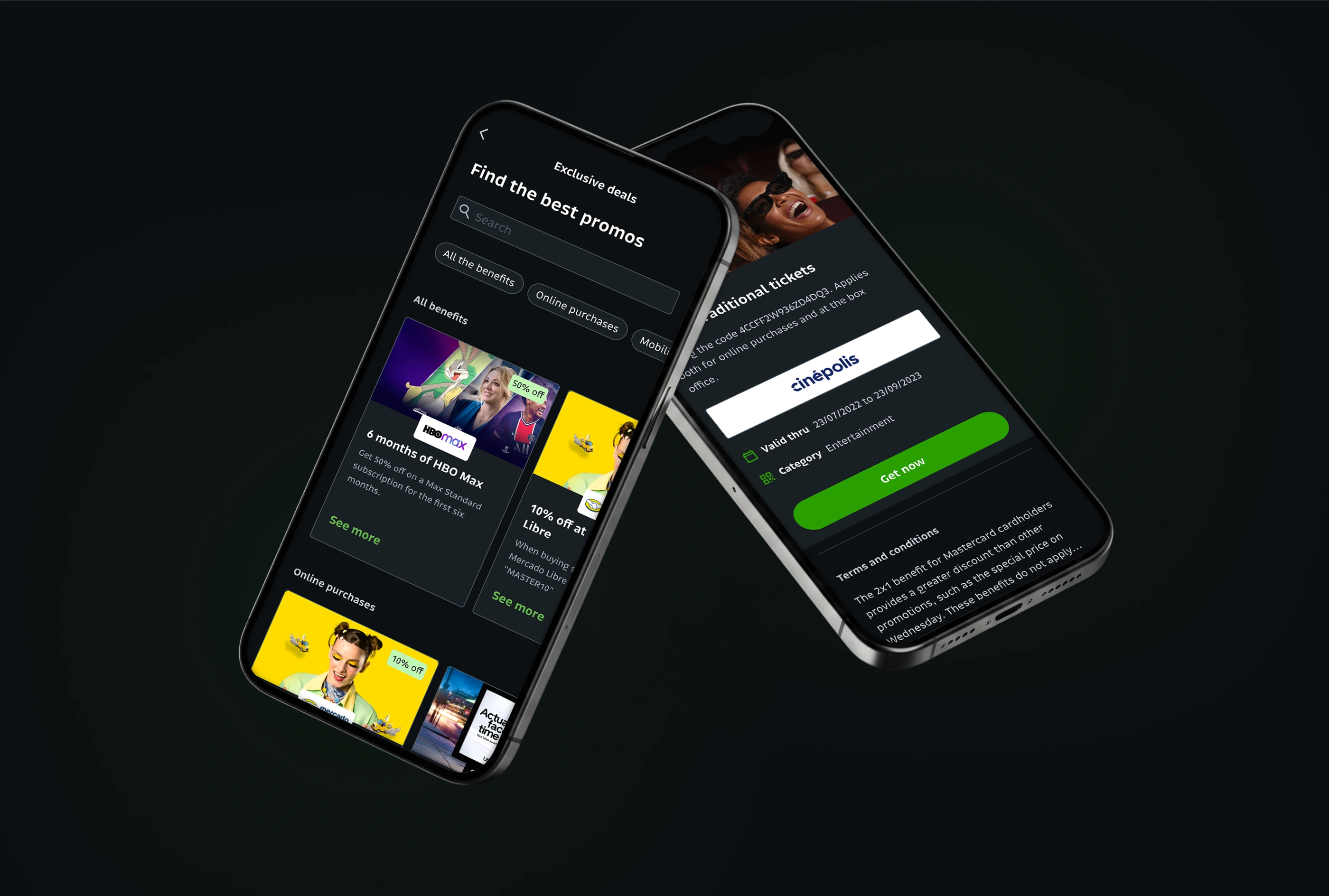
- Browse page: A dedicated benefits page where users can explore all available offers, filtered by category (food, entertainment, shopping, services). The layout was informed by competitive benchmarking — we adopted a card-grid pattern similar to what users recognized from retail apps, reducing learning curve.
- Benefit detail and redemption screens: A two-tap redemption flow: tap a benefit to see the detail (brand, offer, terms), tap "Redeem" to get the code. The Kano insight about redemption simplicity drove this decision — we explicitly chose to minimize steps rather than add confirmation screens that would feel like friction.
- Push notifications and email templates: We designed notification templates to surface benefits updates — new deals available, expiring offers, and engagement nudges — across push and email channels. The copy followed the positive-forward language framework developed with Legal and Content Design.
- Research synthesis as a strategic artifact: The accumulated body of research (survey results, interview transcripts, behavioral maps, competitive benchmarks) was packaged into a synthesis document that fed directly into the next product phase. It became the evidence base for the mid-2023 MVP proposal to rebuild compliant crypto rewards (Phase 2).
Results and learnings
The benefits launch coincided with a period of strong performance for the Bitso Card. During the benefits rollout, the card reached the highest NPS in its history: NPS improved among cardholders by 70+ ppts.
Monthly wallet transactions grew by 30% in the period following the launch. Our attribution model, built with Data Science, estimated that the benefits feature accounted for approximately 40% of the transaction growth — directly aligned with the research finding that benefits drive card usage.
Card MAU increased by 30%, indicating that the benefits experience gave users a reason to return to the card section of the app more frequently. The remaining growth was attributed to other concurrent initiatives including marketing campaigns and seasonal effects.
But despite the strong results, we expected greater absolute transaction growth. The ongoing reduction of Cryptoback continued to weigh on the product — the benefits launch offset some of the decline but didn't fully compensate. This was our clearest signal that any form of cashback (Phase 2) needed to ship as fast as possible.
What I learned
Navigating legal constraints is a design skill, not a blocker. The most creative outcomes in this project came from the closest collaboration with Legal. Treating compliance as a design input opened possibilities that the team had assumed were closed. The reduced Cryptoback that survived alongside the new benefits only happened because we found compliant framing together, backed by research evidence.
Compressed research compounds if you structure it well. We ran five research methods in roughly three weeks. What made it work was that each method was designed to answer a specific question, and the findings built on each other sequentially. The survey identified what users valued; the interviews explained why; the card sorting analysis prioritized the features; the behavioral data identified at-risk segments; and the competitive analysis provided implementation references. This body of work became the foundation for the next two quarters of roadmap planning.
Any form of cashback matters, and credit should be next. Users' emotional attachment to earning something with every transaction was stronger than their attachment to any specific reward format. And the consistent, unprompted demand for a credit card was the most surprising finding — one that directly shaped stakeholder pitches for subsequent quarters.
Team: Matheus Petroni (Senior Product Designer), Sergio Minor (Mid-Content Designer), Raul Leal (Product Manager), Carlos Omaña (Tech Lead), Leandro Romano (Mobile Engineer), Catarina Corniani (Previous Senior Product Designer), Ciss Najar (Marketing), Creative Lab team.